

Colvin Friedman cuts custom neoprene gaskets to your drawing from our California facility. You get ±0.005″ tolerances, three-week lead times, and a direct line to Vice President Josh Rodman, not a queue of account managers.
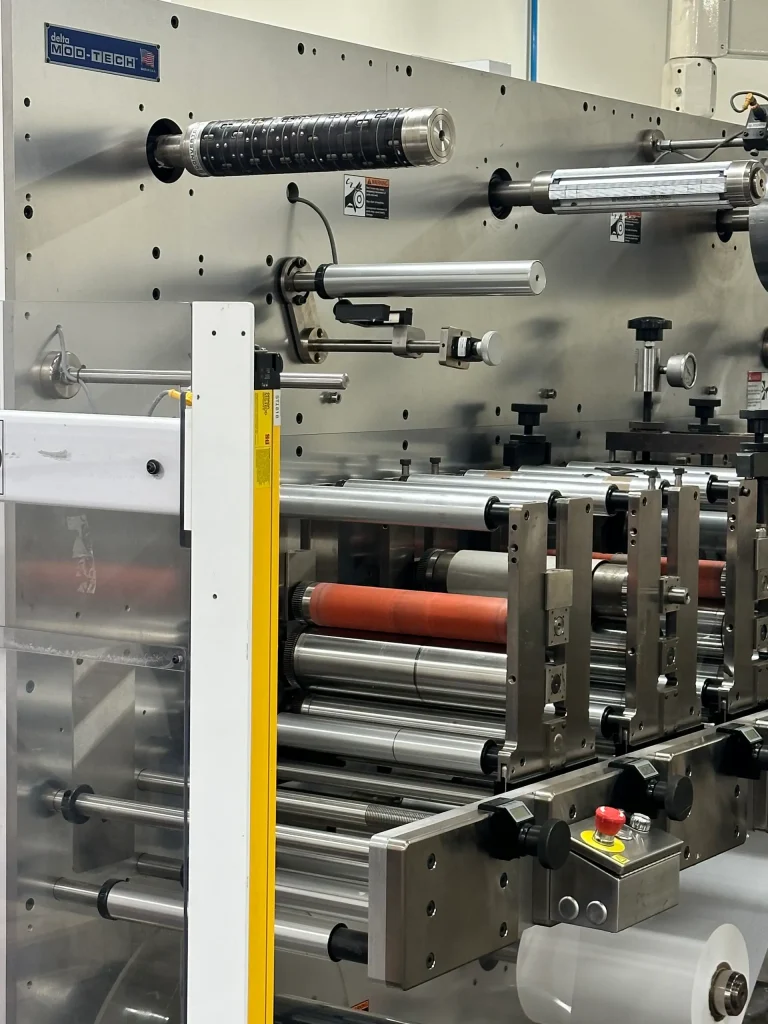
We offer two die-cutting methods. The right choice depends on your volume, material thickness, and tolerance requirements.
| Method | Best For | Specifications |
|---|---|---|
| Rotary Die Cutting | High-volume runs, thin neoprene (up to 0.015″), tight precision requirements | 40,000 parts/hour, ±0.005″ tolerance, max width 16″ |
| Flatbed Die Cutting | Low-to-mid volume runs, thick neoprene (up to 0.5″), larger gasket geometries | 2,000–4,000 parts/hour, ±0.010″ tolerance, max width 40″ |
Not sure which method fits your application? Josh will tell you on the first call.
Call Josh directly: (707) 769-4488
Rotary die cutting holds tight dimensional control across high-volume runs. Your gaskets fit exactly where they need to fit, consistently, across every batch.
Seventy-five years of precision manufacturing without a single rejection on record. Your production line doesn't absorb our mistakes.
U.S.-based production means no overseas delays and no tariff exposure. Your parts arrive on schedule. Every time.
You speak with our Vice President from first inquiry through delivery. Josh handles material selection, design questions, and production decisions personally, not an account manager reading notes.
We laminate PSA backing and kiss-cut gaskets to the liner. Your team installs them without additional preparation steps.
We cut test quantities first. You confirm fit and compression performance before we commit to volume production.
Here’s how Colvin Friedman compares with larger manufacturers and overseas suppliers.
| Capability | Colvin Friedman | Large Manufacturers | Overseas Options |
|---|---|---|---|
| Direct Executive Access | VP Josh Rodman, direct line | Account managers only | Language and time zone barriers |
| Manufacturing Precision | ±0.005″ consistently | ±0.010″ typical | ±0.020″ common |
| Standard Lead Time | 3 weeks | 3–5 weeks typical | 8–11+ weeks |
| Quality Record | Zero rejections since 1949 | Variable by facility | Quality inconsistencies |
| Emergency Response | Under 24 hours | 3–5 business days | 2–3 weeks minimum |
| Production Location | Petaluma, California | Often outsourced or offshore | Overseas |
Successful gasket production starts with the right material and ends with rigorous quality control. Here’s how we manufacture neoprene gaskets from concept to delivery.
01
We review your application, tolerances, and compression requirements to confirm neoprene is the right material.

02
We design and build precision rotary or flatbed tooling based on your part geometry and production volume.

03
We produce sample parts for fit and performance validation before full production.
04
We manufacture your parts with in-process quality monitoring to maintain dimensional accuracy.
05
We inspect, package, and ship your gaskets to your specifications.
Neoprene deforms under cutting pressure. We dial in blade geometry and press dwell based on your durometer and thickness. Edge quality holds across the full run — not just the first pieces off the press.
For adhesive-backed parts, we measure kiss-cut depth through peel tests and cross-section checks. We hold ±0.001" depth tolerance where required.
We validate setup before volume production starts. Dimensional checks happen at defined intervals throughout every run.
We deliver in the format your line uses. Kiss-cut on liner and pull-tab formats work for peel-and-place assembly. Sheeted parts and slit rolls are available when your staging requires it.
Our neoprene gaskets support OEMs and manufacturers across multiple industries with application-specific sealing solutions.
| Application | What We Cut |
|---|---|
| Automotive | Engine compartment seals, weatherstripping, and fuel system components for moderate petroleum oil exposure. |
| Marine and Outdoor Equipment | Saltwater-resistant hull gaskets, deck hardware seals, and engine compartment seals for marine environments. |
| Industrial Manufacturing | Pump housing and valve seals, plus equipment enclosure gaskets for temperature-cycling environments. |
| Construction Equipment | Machinery gaskets for dusty, outdoor, and high-abrasion operating conditions. |
| Electrical and HVAC Systems | Flame-resistant enclosure gaskets and HVAC equipment seals for fire safety applications. |
Neoprene operates from -40°F to 250°F. For applications that run continuously above 200°F, Viton or silicone alternatives perform better. We confirm the right material for your environment before tooling begins.
Yes. We laminate pressure-sensitive adhesive backing and kiss-cut gaskets to liner for peel-and-place installation. We match adhesive type to your bonding surface and installation environment.
EPDM handles long-term outdoor weathering better, but it has no oil resistance. Neoprene covers outdoor exposure, moderate oil contact, and flame resistance in a single material. If your environment includes oil and outdoor elements, neoprene is typically the stronger choice.
Yes. We source FDA-approved neoprene for food-grade and potable water applications. Specify compliance requirements at the start of the project.
Concentrated mineral acids, aromatic hydrocarbons, ketones, and ester solvents all degrade neoprene. For those environments, we recommend a fluoroelastomer and can advise on the right grade for your application.
Colvin Friedman is the ideal partner for manufacturers that need precision-cut neoprene gaskets with dependable quality, fast turnaround, and responsive U.S.-based support.
Call Josh directly: (707) 769-4488