Best Steel Rule Die Cutting Services – Colvin Friedman
Top Rated Steel Rule Die-Cutting Provider
In Business for 75 Years, Colvin Friedman has the Experience to Meet all your Steel Rule Die-Cutting Needs
One of the oldest die-cutting companies in the United States, Colvin Friedman’s experience speaks for itself. We have cut millions of units, fulfilled thousands of orders, and are known for our quality steel rule die-cutting. The table below outlines our steel rule die-cutting capabilities.
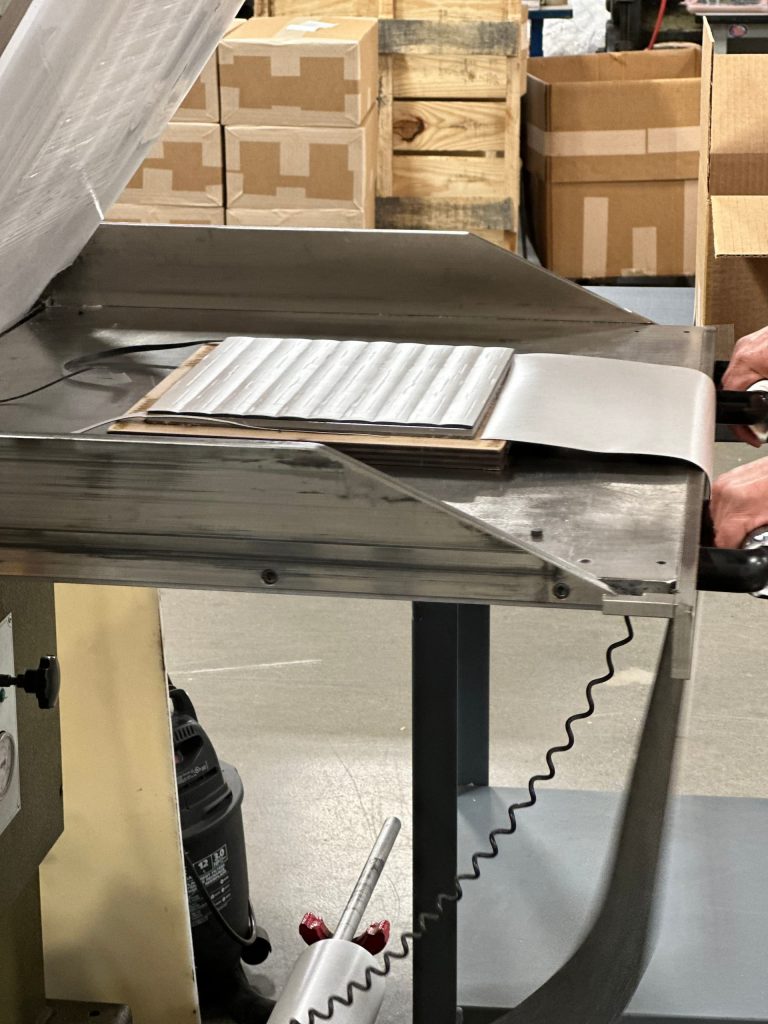
Steel rule dies are utilized in flatbed die cutting to affordably and efficiently maintain an accurate die cut. Steel rule die-cutting uses a specific type of die made of hardened steel rule, pressed into the back of laser etched high quality plywood and/or acrylic.
We can generally utilize steel rule dies to cut products within the following parameters. We may be able to cut projects outside of these parameters, depending on the size and material. For projects under this range, we may recommend rotary die-cutting. If we cannot cut your product, we will refer you to someone who can.
Category
Maximum Product Width
Maximum Product Thickness
Tolerance Level
Maximum Production Capacity
Average Lead Time
Specification
40 inches
.5 inches, material dependent
±0.010, material dependent
2,000 – 4,000 parts/hour (size dependent)
3 weeks
Specifically, we utilize steel rule dies with the following characteristics:
Large array of rule types
Custom/standard punches
Custom ejection foam layouts
Custom base/rule heights
Custom base materials
Custom fixturing
Registration pins
Ejection pins
Stripper plates
Vacuum slug removal
Complex shapes
We Specialize in Thin Gauge Film and Sheet Plastics
If you are unsure whether your product or component can be rotary die cut consider contacting our Vice President Josh Rodman for more information. Also if you are changing your rotary die-cutting provider and wish to understand our pricing and see examples of our work product Josh will provide any needed information.
Steel rule dies are a versatile tool and can be used for a wide variety of products. It is most commonly used for cutting two-dimensional, mass-produced components out of stock and custom materials. Some of the most common applications are compiled in the table below.
Gaskets and Rubber Seals
Thick lenses
Bag stiffeners
Boxes and Packaging
Insulators
Wovens and nonwovens
Leather products
Surgical Masks and PPE
Materials Used
We are able to steel rule die-cut most materials for your products or components. Our most frequently used materials are outlined below:
Paper
Foam
Foil
Plastics
Composites
Fiberglass
Metallic Foil
Polyester Films
Rubber
Adhesives
Fabric
Felt
Silicone
Nonwovens
Material Category
Plastics
Metal Foils
Paper Products
Textiles
Composite Materials
Materials
Polyvinyl Chloride (PVC)
ABS
High & Low Density Polyethylene (HDPE/LDPE)
Polypropylene (PP)
High Impact Polystyrene (HIPS)
Aluminum Foil
Copper Foil
Specialty Paper
Cardboard
Cardstock
Polyester
Nylon
Wovens and nonwovens
Fiberglass
Carbon Fiber
Choosing a Material
If you are uncertain about which material is right for you, we can provide a recommendation that best suits the needs of your project. We consider the following factors to keep in mind when selecting a material to be die-cut:
Material Properties: As different projects require the end product to withstand different mechanical and environmental pressures, we consider various physical properties like durability, flexibility, and resistance to heat, moisture, and chemicals.
Material Form: Steel rule die-cut materials generally will be sheet material, but we can process rolls when necessary.
Production Volume and Cost Efficiency: We take into account your budget when selecting materials. With a relatively quick setup time, steel rule die-cutting can be a great option for smaller productions or larger productions when the materials require it. We want to ensure the selected material gives you the best return on your investment.
End-Use Requirements: Finally, we consider the product’s final function, examining the material’s color, finish, conductivity, and insulation. We select a material with the necessary durability and rigidity to ensure the most precise cut and best quality product.
Our experts are able to help consult to select the best materials and inform you of your options. For more information contact our Vice President, Josh Rodman, via the number below.
With experience stretching across the better part of a century, we have steel rule die cut products for companies across the US and the World. Our expertise includes the production of:
Thermal insulators for large-scale batteries
Custom PPE shielding for full-face respirators
RFID shielding for electronic components
Felt printer pads
Fire barrier film for electrical components
Bike and outdoor recreational bag stiffeners
Steel Rule Die Cutting: Is It Right for You?
Customers are often unsure if steel rule die-cutting is the right die-cutting option for their project. The following checklist provides a list of considerations and potential advantages to review when considering steel die-cutting.
Material and Volume Requirements: Steel rule die-cutting machines can cut a wide variety of softer or semi-rigid materials, generally fed through in sheet form, but we can also process rolled materials when necessary.
Adaptability and Design Flexibility: Steel rule dies are generally inexpensive to produce, and are a great option if your design plan is subject to change. The speed and lower cost with which they are produced will significantly lower potential additional costs.
Speed and Cost Efficiency: Steel Rule die cutting requires a very quick and efficient setup and the machine is very simply operated. This allows for a relatively fast turnaround that is ideal for smaller to medium-sized product orders and lowers your cost per unit.
If your project has requirements different than these, we may be able to offer Rotary die cutting as an alternate option. Below we have outlined some advantages and disadvantages.If your product steps outside of these you may consider flatbed die cutting. We also offer flatbed die cutting and can help you choose between the two.
Steel Rule Die Cutting vs Rotary Die Cutting
Rotary Die Cutting
Pros
Suitable for high-volume orders providing economies of scale
Consistently high precision ideal for complex and detailed designs
Efficient material utilization reducing waste and costs
Faster turnaround times for large orders
Cons
Higher setup costs making it less economical for small batches
Limited to materials in roll form reducing material options
Changes in project scope or design can be costly and complex to implement
Typically requires a long-term commitment due to setup investment
Steel Rule Die Cutting
Pros
More adaptable for low to medium volume without high setup costs
Dies are relatively inexpensive, adaptable to changes
Flexibility in setup allows for customization and changes in design
Often more cost-effective for short runs and prototypes
Cons
Slower production rates can lead to longer turnaround times
Steel dies may dull more easily, requiring replacement and maintenance
Operation can increase labor costs due to material handling
Less suitable for very high-volume jobs due to slower speeds
If you are unsure if steel rule die cutting is the best choice for your project, please contact our experts who can provide you with more information, as well as additional options. To get a free quote or begin the process, please click the button below.
Our process is fine-tuned to ensure the products we produce are of the highest quality. We make sure all components and designs are cut to your specifications and perfectly fulfill their function. The below diagram outlines our process.
01
Stage One - Consultation and Design
During our first consultation, we begin by considering the purpose of your products, your design specifications, and the style of die cutting best suited to the component. We determine the appropriate material, as well as the finishing and tolerance requirements of the product. If necessary, we will design a prototype. Following the design approval, we create a series of test products to verify the design’s quality.
02
Stage Two - Testing and Refinement
Before the production process, we perform tolerance level tests, overall dimension tests, and fit and function tests to test the quality of the design. If the product does not pass the tests with flying colors, we will assist in design refinement to ensure a smoother manufacturing process. At this stage, the customer may perform their own tests and provide feedback. We can create multiple iterations of the product to enhance quality and functionality.
03
Stage Three - Production and Scaling
The product is continually tested throughout production by our full QMS (quality management system) to guarantee its fitness. Quality tests are performed at the incoming, in-process, and final stages of production, and sampling procedures can vary based on customer specifications.