
Custom-manufactured silicone gaskets engineered for medical devices and electronics assemblies where biocompatibility, electrical insulation, and temperature stability prevent system failures.
Colvin Friedman manufactures silicone gaskets for two critical applications: FDA-regulated medical devices and electrical-insulated electronics housings. Our gaskets meet USP Class VI biocompatibility standards or have a dielectric strength of 370 to 500 V/mil. We specialize in igh-volume precision die-cutting of silicone sheet material using flatbed or rotary processes. Every component is application-specific; we do not sell catalog products.
| Property | Specification | Benefit |
|---|---|---|
| Operating Temperature | -67°F to 450°F | Maintains seal integrity across temperature extremes |
| Dielectric Strength | 370-500 V/mil | Prevents current leakage in electronic assemblies |
| Biocompatibility | USP Class VI-compliant options | Safe for direct contact with pharmaceutical products or human tissue |
| Compression Set at 392°F | 15-25% after 22 hours | Retains sealing force under sustained compression and heat |
| Tear Resistance | 50-150 ppi | Withstands installation stress without compromising seal geometry |
Medical and electronics manufacturers choose silicone for its unique combination of biocompatibility, electrical insulation, durability, and chemical resistance, ensuring reliable performance in demanding applications.
| Feature | How It Helps You | Typical Applications |
|---|---|---|
| Biocompatibility for Medical Devices | USP Class VI-certified silicone gaskets maintain sterile environments and prevent chemical migration, meeting extractables testing requirements. |
|
| Electrical Insulation for Electronics | Silicone's dielectric constant (2.75–5 at 1 kHz) prevents electrical shorts, serving as both a mechanical seal and an electrical barrier. |
|
| Temperature Stability | Remains flexible at -67°F and resists hardening at continuous 450°F, tolerating intermittent exposure up to 500°F. Performs consistently through thermal cycling. |
|
| Chemical Resistance | Resists moisture, ozone, UV, fungal growth, cleaning agents, disinfectants, and sterilization processes, ensuring long-term reliability. |
|

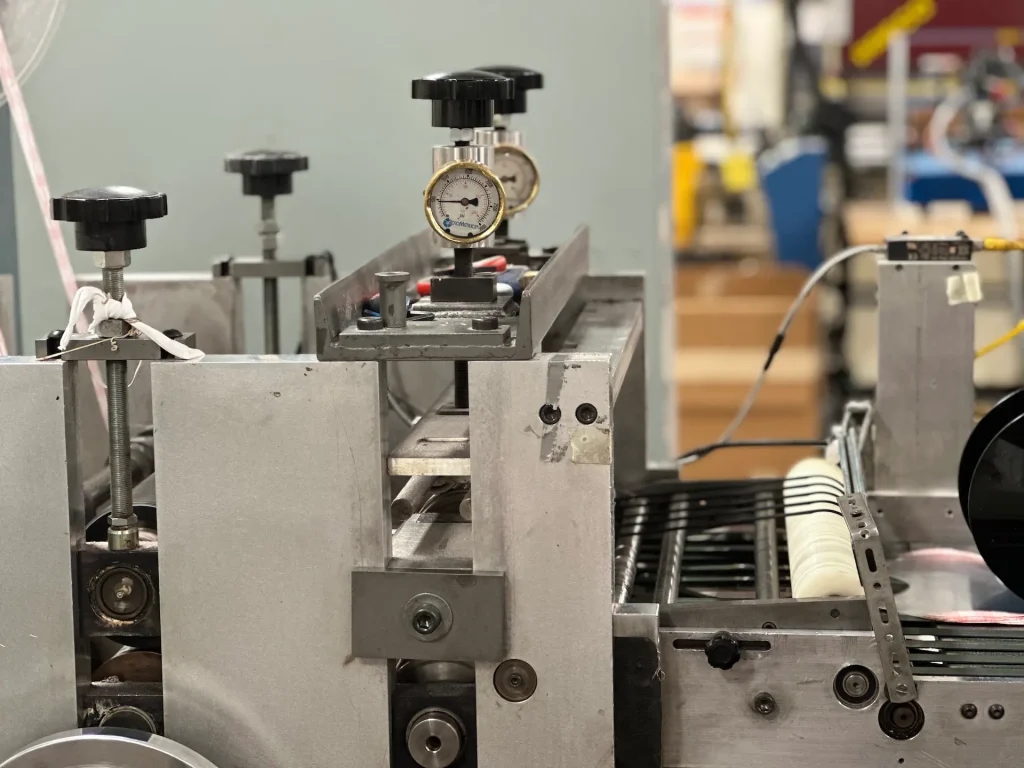
With over 70 years of high-volume production experience, our operators understand exactly how silicone material performs under different cutting methods, delivering tight tolerances at scale. Our U.S. based manufacturing eliminates overseas shipping delays, keeping lead times to days instead of weeks. Engineers communicate directly with owner Josh on tolerances and material selection; no account manager layers are involved. This hands-on process control has resulted in zero recorded quality rejections.
Our manufacturing process delivers precision and consistency from engineering review through final delivery:
01
Submit technical drawings with tolerance callouts, material specifications, and volume requirements. We evaluate manufacturability and recommend the appropriate silicone grade, including FDA or USP Class VI certification requirements if needed.

02
Custom dies are manufactured to your exact geometry, accounting for material compression characteristics and silicone-specific cut behavior.

03
Gaskets are die-cut using flatbed or rotary equipment, depending on material thickness and volume.
Operators monitor dimensional accuracy throughout production runs.
04
The first article inspection confirms that the dimensions match the specifications. In-process checks maintain consistency across the full quantity.
05
Gaskets are packaged to prevent contamination and damage. Delivery timing aligns with your production schedule.
We help manufacturers in multiple industries protect their products and processes with reliable, high-performance gaskets and seals:
| Industry | Applications | Key Benefits |
|---|---|---|
| Medical Devices |
|
|
| Electronics Manufacturing |
|
|
| Pharmaceutical |
|
|
| Food Processing |
|
|
| Automotive Electronics |
|
|
This is the best solution for design engineers specifying sealing components for medical devices requiring USP Class VI biocompatibility documentation or electronics assemblies where electrical insulation prevents current leakage. Your specifications require documented material properties, dimensional consistency across production volumes, and supply chain reliability.
Procurement managers sourcing gaskets for FDA-regulated medical devices or electronics manufacturing, where seal failure can cause regulatory issues, need a manufacturing partner that integrates seamlessly into production schedules with predictable lead times.
Submit technical drawings for a manufacturing feasibility review. Engineers evaluate your specifications and recommend material grades, including FDA-compliant and USP Class VI-certified options when required. Projects from garage inventors to established OEMs receivethe same technical review process.
Standard silicone gaskets function continuously from -67°F to 400°F, with intermittent exposure capability to 450°F. Specialized formulations reach 500°F intermittently but trade some low-temperature flexibility. Your specific operating conditions determine the appropriate grade selection.
USP Class VI certification verifies biocompatibility through extractables testing, showing the material releases minimal chemicals when exposed to biological fluids or pharmaceutical products. Medical device manufacturers specify this certification when gaskets will contact sterile fluids or human tissue.
Silicone gaskets deliver dielectric strength rangingfrom 370 to 500 volts per mil, depending on formulation and thickness. This property prevents electrical current from passing through the material, protecting circuit boards and electroniccomponents from shorts.
The compression set measures how much a gasket loses in thickness when compressed over time at elevated temperatures. Silicone shows 15 to 25% compression set after 22 hours at 392°F, with 75 to 85% of the original thickness recovered. This recovery maintains sealing force during thermal cycling and prevents leak paths.
Tolerance capability depends on material thickness, gasket geometry, and production volume. Submit your technical drawings during engineering review, and we will confirm achievable tolerances for your specifications.
Technical questions? Call Vice President Josh Rodman directly at (707) 769-4488 to discuss material selection, tolerance capabilities, or production volumes. Specifications that push the limits of capability often reveal the most interesting engineering solutions.