
Your part’s dimensions help determine whether we can produce it efficiently on the available die-cutting equipment. Checking the size limits upfront can prevent tooling changes, production delays, or the need for a different cutting method.
Use the chart below to compare your part dimensions with our press limits. Then follow the five steps to confirm fit and send us a quote-ready project package.
1. Material Size Limits on Flatbed and Rotary Presses
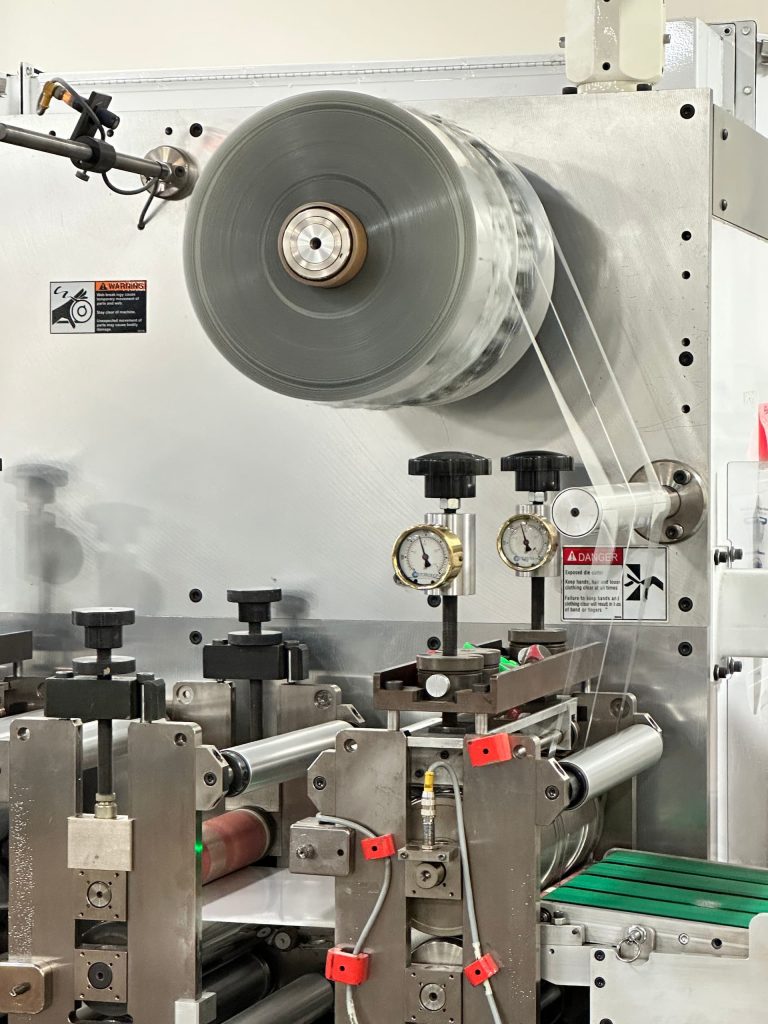
Start by checking your material, since its size and thickness determine which press can handle the job. Our flatbed presses support different maximum sheet sizes and thicknesses depending on the material, while our rotary presses process roll-fed materials up to 16 inches wide.
| Material | Max Sheet (Flatbed) | Max Thickness (Flatbed) | Max Roll Width (Rotary) | Max Thickness (Rotary) |
|---|---|---|---|---|
| Paper and Cardboard | 40″ x 96″ | 0.5″ | 16″ | 0.015″ |
| Plastic Films | 36″ x 72″ | 0.25″ | 16″ | 0.015″ |
| Rubber and Foam | 40″ x 96″ | 0.5″ | 16″ | 0.015″ |
| Adhesives and Labels | 24″ x 36″ | 0.125″ | 16″ | 0.015″ |
| Metal Foils | 24″ x 36″ | 0.1″ | 16″ | 0.015″ |
| Gaskets and Composites | 40″ x 96″ | 0.5″ | Not applicable | Not applicable |
We slit jumbo rolls (oversized parent rolls) down to fit our rotary presses. Our team confirms your exact stock thickness during quoting. Call us early if your part measures wider than 40 inches or thicker than 0.5 inches.
2. Rotary vs. Flatbed: Pick the Press That Fits Your Run
Once you confirm the material, match your part design and order volume to the press best suited to the job. Our servo-driven and line-driven rotary presses handle thin, flexible roll-fed materials at high speeds, while our flatbed presses are better suited for thicker, rigid sheets and larger parts.
| Spec | Rotary | Flatbed |
|---|---|---|
| Output | Up to 40,000 units per hour (size dependent) | 2,000 to 4,000 parts per hour (size dependent) |
| Initial Tooling Cost | $500 to $2,000 | $100 to $500 |
| Setup Time | 1 hour | 20 minutes |
| Die Types | Flexible dies and solid rotary dies | Steel rule dies and male/female dies |
Flatbed tooling costs less up front. Rotary presses lower your cost per part as your volume increases.
Press Choice by Industry
Manufacturers in your industry often use the same press for similar parts.
| Industry | Typical Press | Typical Parts |
|---|---|---|
| Automotive | Flatbed | Rubber and foam gaskets, acoustic insulation |
| Medical | Rotary | Adhesive-backed parts, thin plastic components |
| Electronics | Rotary | Electromagnetic interference (EMI) shielding films, conductive foils |
3. Tolerance Ranges: Confirm What Your Material Can Reach
Your achievable tolerance depends on both the material’s thickness and the press used to cut it. Our tolerance calculator starts from these base values.
| Material | Thickness Range | Recommended Press | Base Tolerance |
|---|---|---|---|
| Sheeted Plastics | 0.010″ to 0.093″ | Flatbed | ±0.010″ |
| Films | 0.001″ to 0.010″ | Rotary | ±0.005″ |
| Elastomers (Rubber-Like Materials) | 0.020″ to 0.125″ | Flatbed | ±0.010″ |
| Adhesives | 0.005″ to 0.100″ | Flatbed | ±0.010″ |
| Foams | 0.125″ to 0.250″ | Flatbed | ±0.015″ |
Soft foams and stretchy films often need wider tolerances, from ±0.015 to ±0.025 inches. Need tighter numbers? Send us your specs, and we’ll tell you what your material can reach before you commit to tooling.
4. Material Behavior: Plan for How Your Stock Reacts to the Die
Each material reacts differently to the blade. Flag these details on your drawing so we can plan your run around them.
| Material | Common Reaction | What to Tell Us |
|---|---|---|
| Paper and Cardboard | Edges fray under a dull die | Edge quality requirements |
| Plastic Films | Film stretches during the cut | Critical dimensions |
| Rubber and Foam | Material rebounds after the cut | Compressed and free-state dimensions |
| Adhesives | Residue builds up on the die | Adhesive type and liner |
| Metal Foils | Foil wrinkles | Flatness requirements |
| Composites | Layers separate (delaminate) | Layer structure |
Temperature and humidity also change how adhesives and foams cut. Tell us where you store and use your parts. We factor those conditions into your material choice.
5. Quote-Ready Projects: Send the Details We Need
Include these items with your project. Our team uses them to confirm your press and price your job faster.
| Item | What It Tells Us |
|---|---|
| Part Drawing With Dimensions | Part size and critical features |
| Material Type and Thickness | Press choice and tolerance range |
| Tolerance Requirements | Dimensions that need the tightest control |
| Per-Order and Annual Volume | Rotary or flatbed tooling |
| Delivery Schedule | How we fit stocking into your production plan |
Not sure your project qualifies? Send it anyway. We take on prototypes and full production runs. You keep one vendor as your volume grows.
Submit Your Project
Colvin-Friedman brings more than 70 years of high-volume production experience to every custom job, with zero recorded quality rejections. We cut your components in the U.S. and integrate into your production schedule so you never run out of stock. You talk directly to the people running your job, including our owner/operator, Josh.
Submit your project or, if you have early questions, let’s talk about your project.